Put No Faith in Words: How Member‑Led Organising Actually Works | Food & Solidarity
Food & Solidarity is a member-led organisation in Newcastle upon Tyne working on food security, housing rights and eviction defence.
Put No Faith in Words: Excerpt
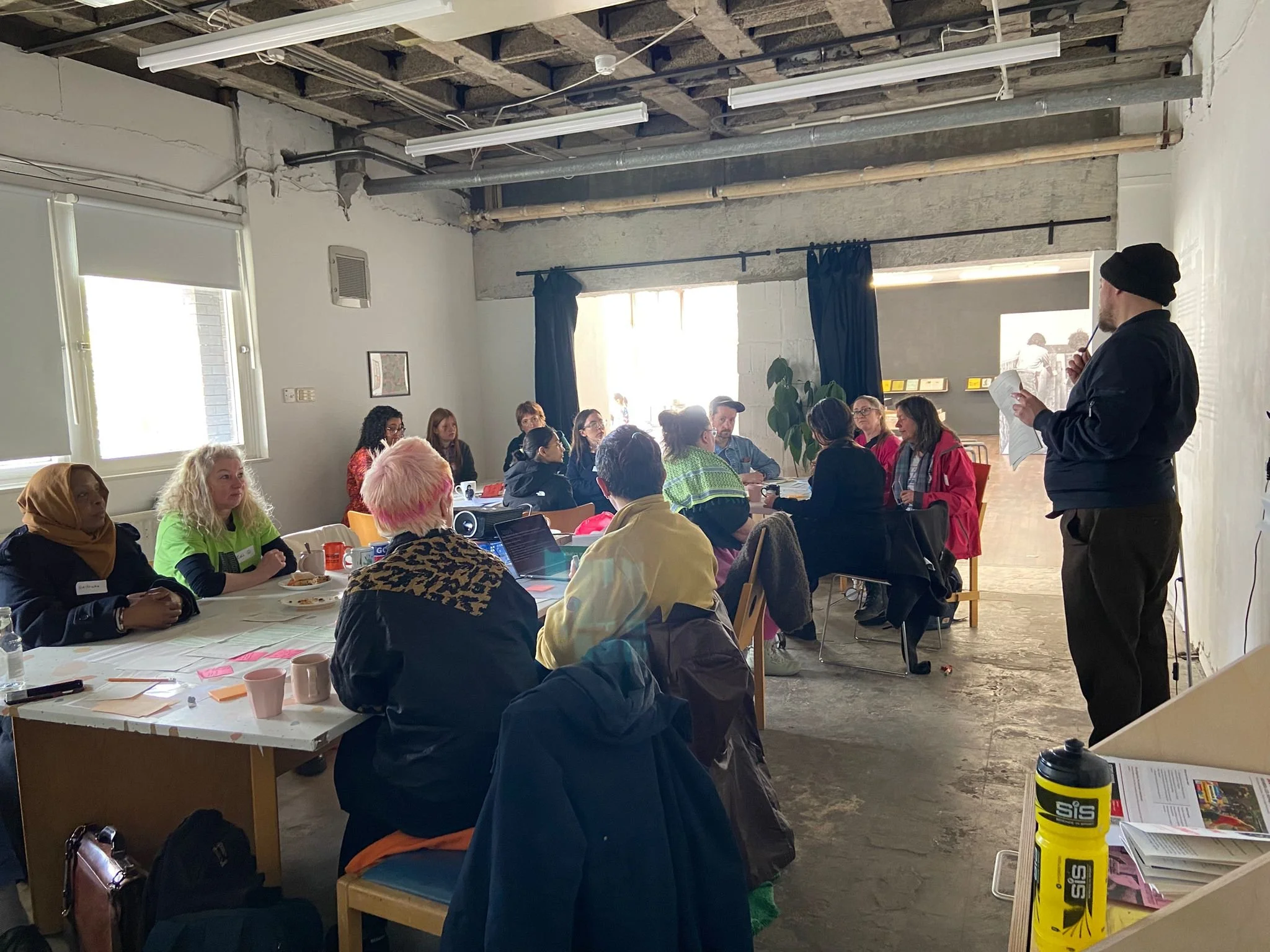
Food & Solidarity is a member-led organisation in Newcastle upon Tyne. Members help members with food and housing security by working together to hand out food parcels, fight companies and stop evictions. This week, we thought about how organisations like ours come together over a common cause to do great work to create positive change or block negative change.
They do this by; listening to its members and adapting their approach based on what people said they needed, for example the national “Don’t Pay Campaign” in 2022 October price cap: what is the Don't Pay UK movement and your rights | Cambridgeshire Live and the more local activity to scrap the two-child benefit cap. Here, North East residents took action to Kim McGuinness, the North East Mayor, to demand the scrap. Both movements won what they were fighting for.
They were successful through coming together on a goal that everyone agreed to and taking action in a way that everyone agreed to. They changed things when members spoke out about it, and each person did what they said they were going to do.
However, another thing many movements have in common was that after the goal was reached, the organisation came to an end, or didn’t go on to have any more great successes.
We think this is because of two reasons: people stop showing up, burnt out. Then, because people stop showing up, the organisation doesn’t achieve its goals, so those who stayed feel burnt out fighting for a change that doesn’t come.
So how do we make Food and Solidarity different so that we can keep fighting for our members and our communities?
Keep food at our heart. Every week, even if nothing changes, all our members are able to say that they contributed to someone getting food: themselves, others, or both. There is consistent good produced.
We show up when we say we will, and we do what we say we will do, for ourselves and each other.
We are flexible, members can contribute different things at different times depending on what works for them.
We lift each other up, with kindness, empathy, and curiosity for different world experiences.
We follow the people, standing with them on not just one issue, but any issue right-here-right-now. By doing this, we remain current and ready to take action as it comes.
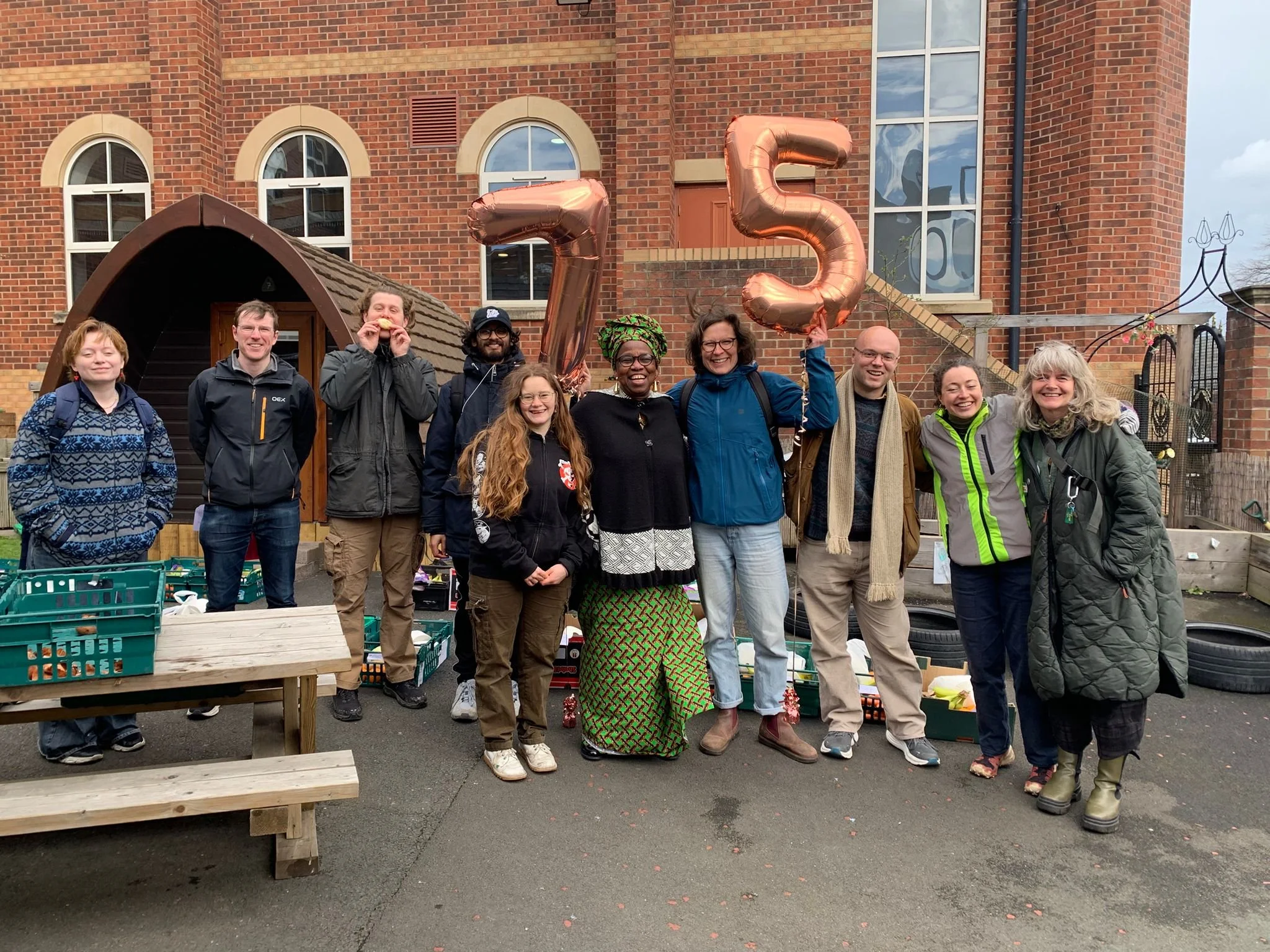
From DontPay to the Two‑Child Benefit Cap
Every few weeks something lands in our inbox asking us to sign a statement.
In autumn 2022 we held a community meeting about the cost energy crisis. A group of members were interested in the DontPay campaign, energy direct debits withheld en masse. Conversations and surveying of members, and what they wanted was revealing, Over 60% of members were on prepayment meters. DontPay wasn't available to them. So this reframed and improved our plan: PPM workshops in church halls across the West End, bailiff resistance training, and a rapid-response network. DontPay activists attended the national level workshops we ran and integrated PPM resistance into their organising. The workshop got national press coverage. We forced meetings with executives of PPM and smart meter bodies. An internal EDF presentation obtained via FOI cited non-payment and community resistance as an existential threat to the energy retail sector, pressure that fed into Kwasi Kwarteng's political collapse. The following February, all major energy firms were ordered to suspend force-fitting of prepayment meters. The following year DontPayUK were no more.
The two-child benefit cap campaign started the same way. Members at a meeting talking about what the cap was doing to families they knew. Someone said: what if we actually organised around this? It went to the membership and was voted on. What came out of that room: a photo petition built from members' faces in Elswick, Benwell, Cowgate, Blakelaw, Walker, Byker, and Arthur's Hill, a fun run outside Kim McGuinness's office, a council motion written while people were packing food parcels. councillors tried to block it, members were in the room. When McGuinness ignored the demand, members were outside her office. The motion passed by a single vote. The cap was abolished in the Autumn 2025 Budget.
The campaign had a self-imposed threshold (although from our perspective, this is just the minimum for real action): a minimum of 60% of members photographed for the petition before it would go forward. If we hadn't reached that, we would have stopped. Not because the politics were wrong but because a campaign that doesn't move the actual base isn't real, whatever its merits may have been judged on paper.
When Breamish House residents had been ignored for months over leaking ceilings and dangerous mould, they door-knocked their own block, collected evidence together, and took a collective letter to a cabinet meeting. Repairs within 24 hours.
Every one of those campaigns changed because the membership changed it, the membership was also required to participate in a material way, in large numbers for action to be carried forward, otherwise no action would be taken. The organisation didn't arrive with the correct line and find people to agree with it. It found out what people were facing and built from there, with the people facing it, accountable to them at every stage. When demands were ignored there was always something to do next, because the people making the demand were the people affected by it, and they hadn't gone anywhere.
None of this is a criticism of people who show up because something is happening to their family, their community, their people. The question is what the showing up builds, and whether it's still there when the moment passes.
The Burnout Cycle in Activism
Activist groups don't work this way. They follow a pattern consistent enough to be predictable: an influx of members, often people new to organising, usually around a moment of heightened political energy. Increased activity. Then stagnation, as the gap between the politics and any material change becomes impossible to ignore. Then attrition, then collapse, then the cycle starting again with a new intake who weren't there for the last one. The organisation may continue to exist, particularly when sustained by capital funding, but it is diminished, and its potential to grow has been diminished too.
The burnout this produces comes from two directions. One is watching demands ignored because there is no organised base capable of making non-compliance costly. A protest with no mechanism for escalation teaches participants that protest achieves nothing. The other is the internal culture of the groups themselves: the arguments about correct theory, the line disputes, the endless adjudication of who has the right analysis. People who came in wanting to change something material find themselves spending their energy on questions that have no bearing on anyone's housing or wages or safety. They leave, usually having concluded that organising doesn't work, which is the wrong lesson from the right experience.
Why Food Parcels Keep Us Grounded
There's something honest about the food bank volunteer who is making no claim to political transformation. They know what they did. Someone got fed. The material reality is unambiguous, even if the politics are absent. The activist who spent six months on a campaign that produced a statement nobody read doesn't have that. The work went nowhere, produced nothing for anyone, and the organisation is already thinning out.
The two failures are the same failure. A group that produces statements without enforcement mechanisms and a group that argues endlessly about theoretical correctness are not doing different things. They are both substituting production for outcomes. The statement is proof of political existence. The argument about the statement is proof of political seriousness. Neither requires winning anything. Neither requires anyone outside the group to change their behaviour. The people whose conditions the politics is supposedly about are not participants in this cycle. They are its justification.
Being the kind of person who attends protests, holds correct positions, and is seen in the right places becomes something you are rather than something you do toward a specific end. Anyone who has spent time on Twitter, or in certain meeting rooms, will recognise this instantly. The organisations this culture produces are vehicles for that identity as much as anything else, which is why they can absorb enormous amounts of energy without producing anything for the people they claim to represent. When the organisation's politics aren't clean enough, you find one that fits better, and leaving gets dressed as principle.
It has a history. The Congress for Cultural Freedom, a CIA front organisation active throughout the 1950s and 60s, systematically promoted exactly this kind of politics: individualist, culturally sophisticated, oriented toward ideas rather than organisation. The goal was a politics of position-taking rather than base-building, where engaging with the correct framework substituted for the harder work of organising among people whose material conditions gave them every reason to fight. A left that mistakes its own theoretical production for political activity is not a threat to anyone. That was the point.
This is also why the internal culture of these groups compounds the burnout. The arguments about correct theory aren't incidental, they are how they work. Theoretical positioning is the main activity. Someone who came in wanting to change something material and finds themselves adjudicating line disputes has not ended up in the wrong organisation by accident. They are in an organisation doing exactly what it was shaped to do.
Most of the people waiting are not in a position to find a better organisation. Most of the people writing theory online are.
This is also what burnout actually is. It is not tiredness from too much work. It is the specific exhaustion of producing things that change nothing, of arguments that have no stakes outside the room they happen in, of an identity that requires constant maintenance because it is never confirmed by anything external. The people who left having concluded that organising doesn't work were not wrong that nothing was working. They were wrong about why.
If a Food & Solidarity member is depending on you for help with housing or food, and you don't follow through, you've damaged something everyone in the organisation depends on. Members who take on cases sign a responsibilities' agreement because the stakes are real for the person waiting. Democratic decisions made at general meetings are binding because the organisation has to be capable of acting together when it matters. Not to enforce a theoretical position, but because someone is waiting on the outcome.
A statement is only as meaningful as the organised base behind it and the capacity to escalate when it's ignored. We were established to enact structural, material change. That requires starting where people actually are, following where they lead, and staying when things don't move.
Words are easy.
What membership means
Members pay from £3 a month (sliding scale pay less if you’re on benefits, or a low income; more if you can). That money funds casework, the rapid-response network, and keeping the organisation independent of grant conditions. Members can participate under a chosen name. We don’t share member data with anyone.
If you’re facing a housing crisis, eviction, or food insecurity,membership means you have people around you who know what to do and will stay. You don’t have to have anything to offer first.
Either way, you have a say in what the organisation does next. That includes casework, direct action, and showing up at hearings and cabinet meetings. Many members are already in unions, community groups, or campaigns. F&S isn’t a replacement, it’s where those commitments become accountable to a specific place and the people in it.
To join or find out more: foodandsolidarity.org/join or call 07393 101018.
Come to the next open meeting
We hold a meeting every month. If you’re in Newcastle and facing housing problems, eviction, or food insecurity, or if you want to work with people who are, come to the next one. If you move, membership remains, & can help you start something where you’re going. Details at foodandsolidarity.org/join.
If you’re elsewhere and want to build a branch, or if you’re in an organisation that isn’t working, and you’re not sure why, come to an open meeting first or write to organiser@foodandsolidarity.org.