

Membership Is Not a Donation Model: It's Collective Power
A donor gives money and walks away. A member is part of what happens next.
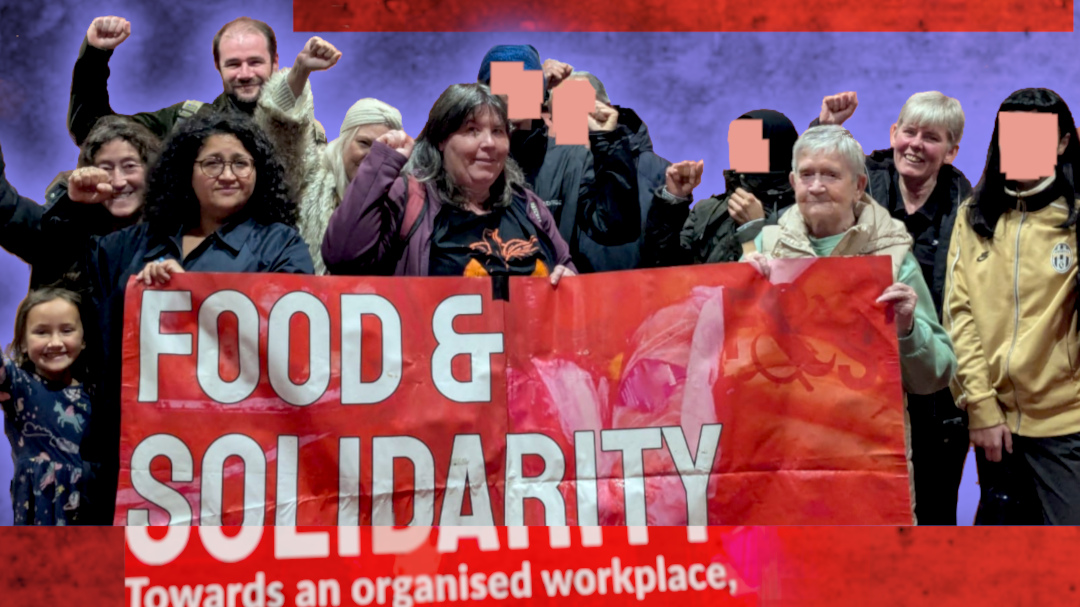
When Grace faced eviction, it wasn't a donor who sat with her in Newcastle County Court. It was Fred, a member, who was there for the entire hearing. When Breamish House residents reported damp for months with no response, it was members who door-knocked the block, collected evidence together, and delivered the collective letter that got repairs done in 24 hours. That is what membership is. Not a transaction. A commitment to show up.
Members Are Not Passive Recipients
Food & Solidarity was founded in 2020 during the COVID-19 pandemic as a mutual aid response in the Inner West End of Newcastle, Benwell, Elswick, Arthur's Hill. It was built by the people it was built for. That has not changed.
When one of our members spoke at the Joseph Rowntree Foundation's UK Poverty 2026 report launch, one of the most widely cited poverty research events in Britain, they were not a case study. They were a participant, standing alongside the data and connecting it to their own life. When members organised to stop the Home Office's seven-day eviction policy for refugees, they were not recipients of a service. They were at Mears' offices in Darlington demanding a reversal. When the two-child benefit cap campaign needed people to travel to Sheffield in January 2025, it was members who went.
The organisation survives and grows through mutual responsibility, because everyone contributes what they can, and everyone receives what they need.
Why Membership Matters
Individual struggles are easy to ignore. Organised ones are not.
Hanan Abdulla reported black mould, rotting fixtures, and damp so severe it short-circuited her shower to her council landlord, again and again, for eight years. Alone, she was easy to ignore. With Food & Solidarity behind her, the council acted. Read Hanan's story →
Membership creates what individual crisis response cannot:
- Continuity, the same people show up, month after month, case after case
- Shared knowledge, what worked for Grace's eviction informs the next one
- Scale, 500 members means 500 people who can be called on
- Legitimacy, a collective demand carries weight that a single complaint does not
The Big Issue named Food & Solidarity a Changemaker Award winner in 2025. 3,000+ food parcels were distributed that year. Multiple evictions were blocked. Dozens of disrepair cases were resolved. None of that happens without a membership base that keeps showing up.
How Collective Power Is Built
Collective power is not abstract. It is built through specific actions, repeated over time, by people who already know each other before the crisis hits.
Relationships
Fred knew to show up at Newcastle County Court because he was already a member. Neighbours at Breamish House door-knocked together because they had already organised together. You cannot build that in a crisis, you can only use it in one.
Shared Conditions
Members in Benwell, Elswick, Blakelaw, and Cowgate face the same landlords, the same council, the same benefit system. Shared conditions make shared action possible. What one member learns about a Section 21 validity checklist protects the next.
Ongoing Participation
The May Day training session in Leazes Park, where members role-played bailiff encounters to prepare for Dennis's eviction, was possible because members were already meeting, already organised, already ready to act on a few days' notice.
Membership is funded on a sliding scale, £3 a month for unwaged workers, rising to one hour's wage for higher earners. That structure is itself an expression of the model: everyone contributes what they can, and the organisation exists for all of its members equally.
Collective power is built through relationships, shared conditions, and ongoing participation. You cannot buy it. You can only be part of it.
Build Collective Power With Us
500 members. Founded 2020. No fees that price anyone out. Democratic decisions. Not a charity. Not an advice service. An organisation where you are part of what happens, to you and to everyone else.
Become a MemberMembership Is the Local Work. The March Is the National Escalation.
On 18 April, Food & Solidarity members march through Central London as part of 40+ organisations demanding rent controls, a freeze on service charges, and council homes. The court support, the training sessions, the collective letters, members make that possible.
Why We're Marching on 18 April →Frequently Asked Questions
What is membership at Food & Solidarity?
Membership is a commitment to show up, for yourself and for other members. It is not a donation model where money changes hands and the transaction ends. Food & Solidarity was founded in 2020 as a mutual aid response in the Inner West End of Newcastle, governed democratically by its members. All decisions are made collectively at member meetings. What we are →
What do members actually do?
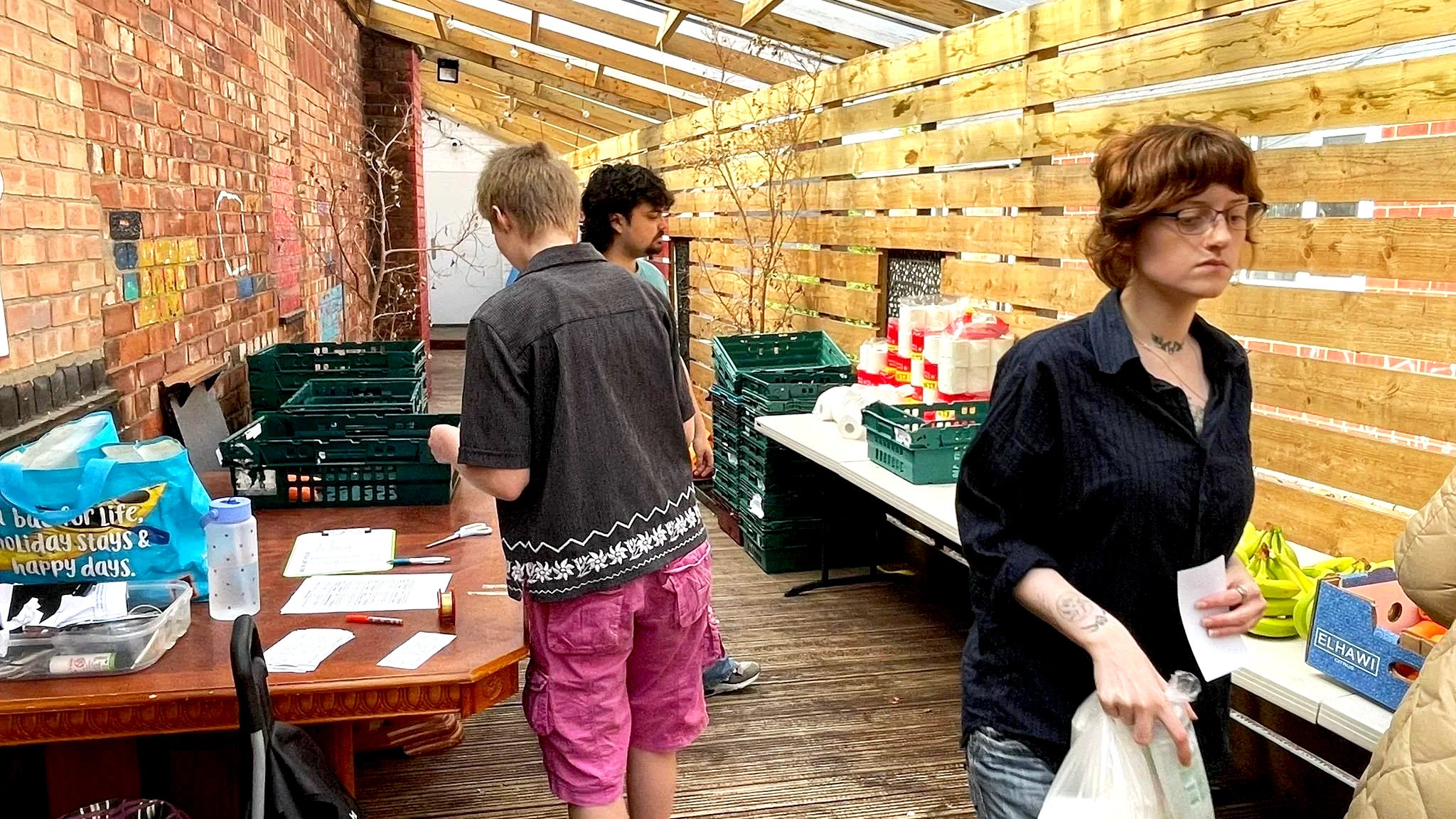
Members attend court hearings with each other. They door-knock blocks together to document disrepair. They train in parks on May Day to prepare for bailiff resistance. They travel to Sheffield for housing organising gatherings. They speak at national poverty research launches. They hold Halloween pickets on Gosforth High Street. They raise funds when a member faces a £1,315 court bill. Member wins and stories →
How much does membership cost?
Membership is on a sliding scale based on income: £3/month for unwaged workers, £4/month for part-time or precarious workers, £10/month for minimum waged workers, and one hour's wage per month for higher earners. No one is priced out. Membership fees are the organisation's main source of income and fund food parcels, housing defence, and community organising. Join →
Why is membership different from donating or using a food bank?
A food bank gives food parcels to recipients. A donor contributes money without joining the collective. Food & Solidarity rejects both models. Members receive food parcels and make decisions about how the organisation runs and organise collectively on housing, poverty, and direct action. The same person who receives a food parcel this month may be the person who sits in court with a neighbour next month. That is what the membership model makes possible. More on what we are →
Who can join?
Food & Solidarity is a membership organisation for low, no, and moderate income people in Newcastle. Members come from across the city, originally rooted in Benwell, Elswick, and Arthur's Hill, now operating citywide including Blakelaw and Cowgate. Regardless of immigration status, housing situation, or whether you've ever been to a meeting before, if you want to be part of something collective, you can join. Join →
How is collective power built?
Through relationships formed before a crisis hits, shared conditions that make shared action possible, and ongoing participation that means 500 people can be called on at short notice. When Breamish House residents needed to act, they already knew each other. When Dennis needed people in the park on May Day, members showed up. Collective power cannot be built in a crisis, it can only be used in one. That is why membership, not just crisis response, is the model.
This is a consultation. That's meant to mean we've been invited to speak. But the words have already been chosen for us.
The form asks us to rank things that can't be ranked. It wants us to put, in order, the ways housing can improve our health, to say whether access to healthcare matters more than clean air, or a park more than a well-lit street. There's no honest order to that.
Your rent went up. The government spent 48 hours saying it might do something about that. On Monday the Chancellor said she was thinking about a freeze on rent increases. By Wednesday the Housing Minister was on the radio explaining why that would hurt tenants. Local elections are on 7th May. Labour is expected to lose seats across the country. The story appeared four days before polling day. They dropped it.
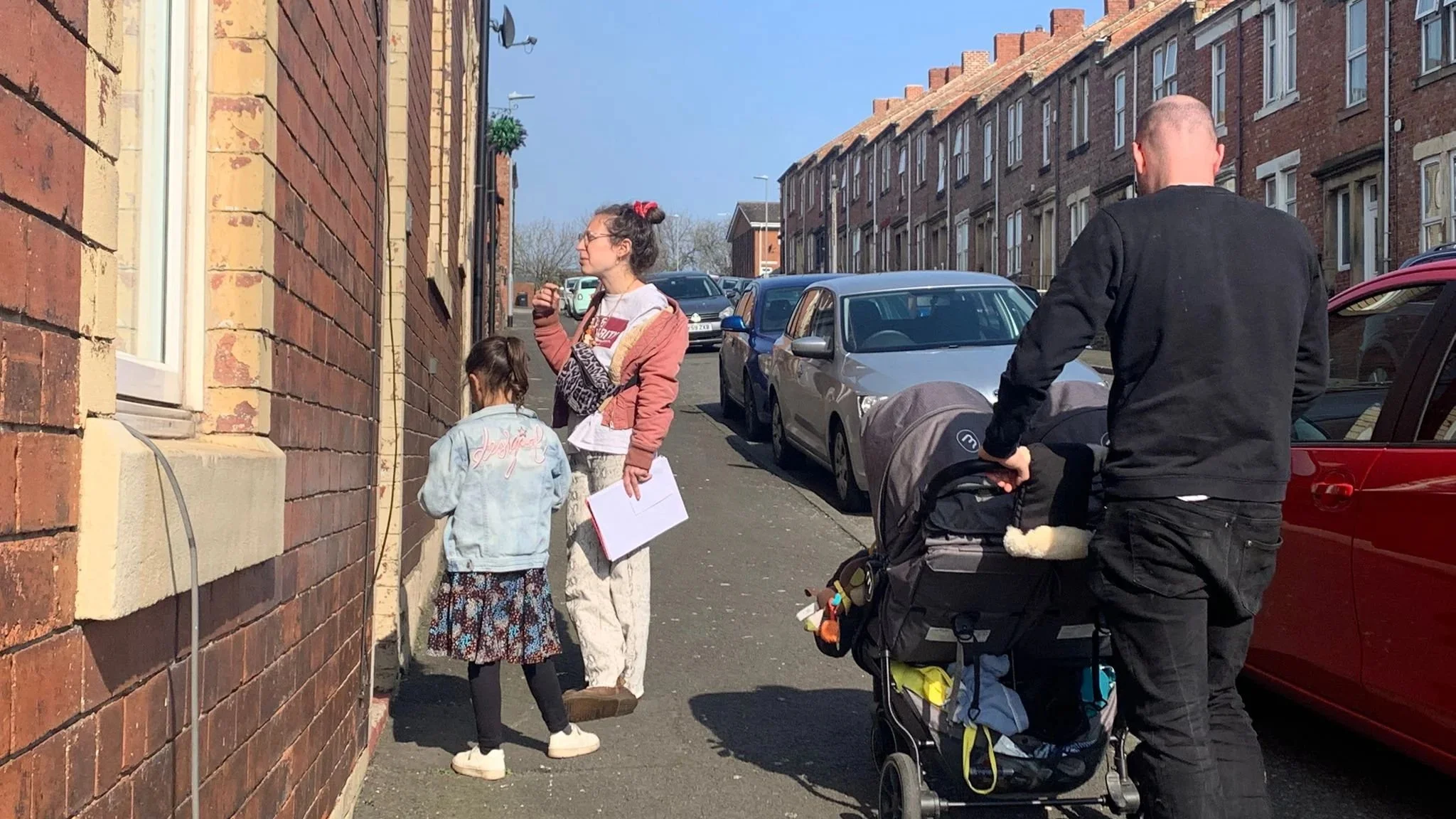
Door Knocking in Newcastle: Join Our Spring 2026 Recruitment Drive. Worried about talking to strangers? Here's why door knocking builds community, and why you should join our April 2026 volunteer drive in Newcastle. No experience needed.
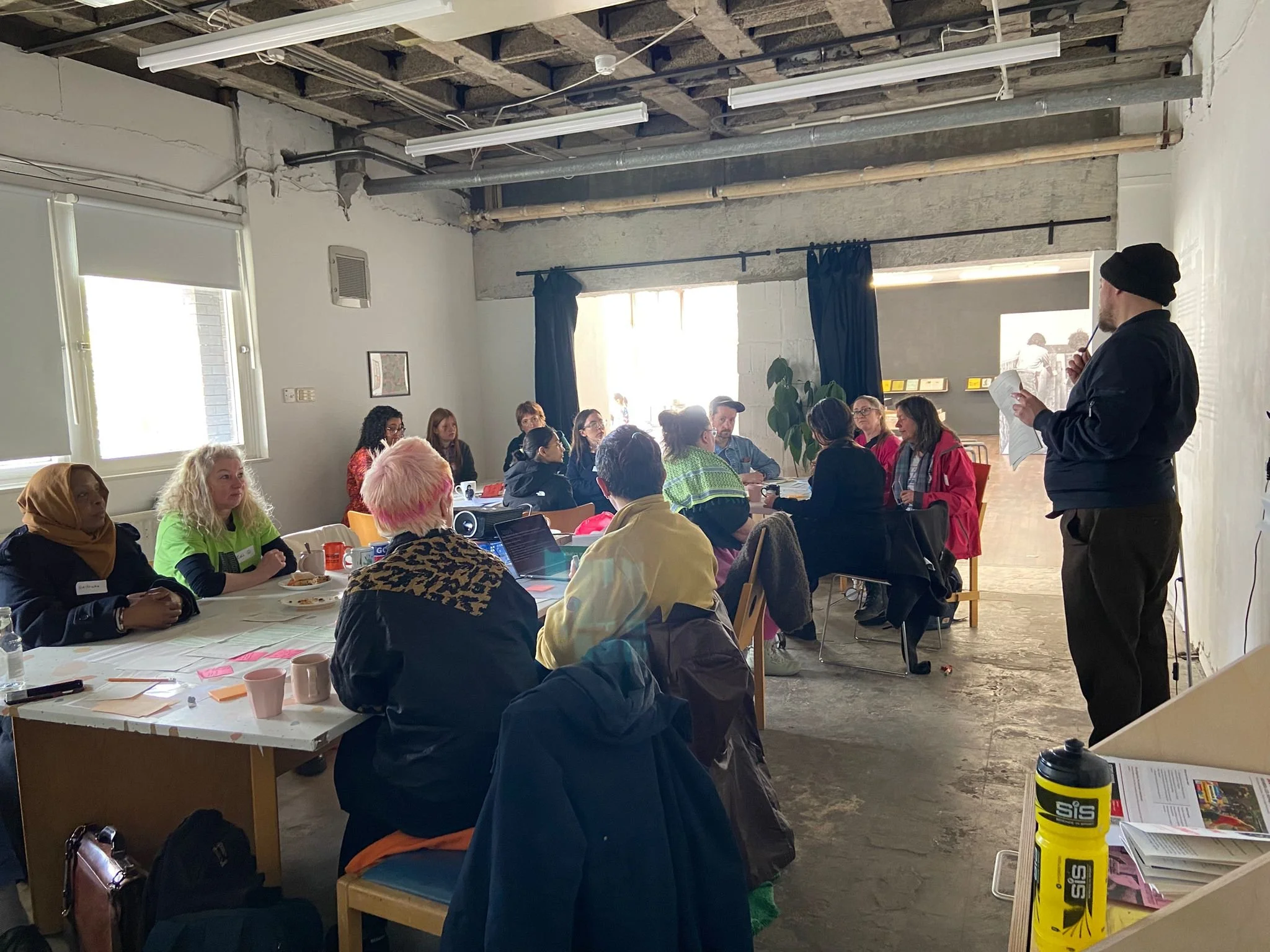
Food & Solidarity is a member-led organisation in Newcastle upon Tyne. Members help members with food and housing security by working together to hand out food parcels, fight companies and stop evictions. This week, we thought about how organisations like ours come together over a common cause to do great work to create positive change or block negative change.
They do this by; listening to its members and adapting their approach based on what people said they needed, for example the national “Don’t Pay Campaign” in 2022 October price cap: what is the Don't Pay UK movement and your rights | Cambridgeshire Live and the more local activity to scrap the two-child benefit cap. Here, North East residents took action to Kim McGuinness, the North East Mayor, to demand the scrap. Both movements won what they were fighting for.
They were successful through coming together on a goal that everyone agreed to and taking action in a way that everyone agreed to. They changed things when members spoke out about it, and each person did what they said they were going to do. However, another thing these movements have in common was that after the goal was reached, the organisation came to an end, or didn’t go on to have any more great successes.
We think this is because of two reasons: people stop showing up, burnt out. Then, because people stop showing up, the organisation doesn’t achieve its goals, so those who stayed feel burnt out fighting for a change that doesn’t come.
So how do we make Food and Solidarity different so that we can keep fighting for our members and our communities?
Keep food at our heart. Every week, even if nothing changes, all our members are able to say that they contributed to someone getting food: themselves, others, or both. There is consistent good produced.
We show up when we say we will, and we do what we say we will do, for ourselves and each other.
We are flexible, members can contribute different things at different times depending on what works for them.
We lift each other up, with kindness, empathy, and curiosity for different world experiences.
We follow the people, standing with them on not just one issue, but any issue right-here-right-now. By doing this, we remain current and ready to take action as it comes.
The Housing Crisis Is Destroying Our Communities
When rents rise, whole neighbourhoods change. The people who built communities, who know their neighbours, who use the local school, the local shop, the food bank get pushed out. The housing crisis doesn't just affect renters. It hollows out the places we all live in.
Sky-high rents are forcing people to cut back on essentials like food and heating. Families are being pushed out of their homes altogether, cut off from family, friends, and community. Homelessness has reached record levels. There are an ever-increasing number of homeless deaths. Disabled renters face discrimination and cannot secure accessible homes. Institutionally racist housing associations and council landlords neglect and mismanage estates damaging our health and letting children like Awaab Ishak die.
This is not bad luck or mismanagement. It is the result of decades of political choices. For too long, successive governments have prioritised the desire of private developers and corporate landlords to make a profit over our need for affordable, secure, accessible homes. This can't go on. It's time to fight back.
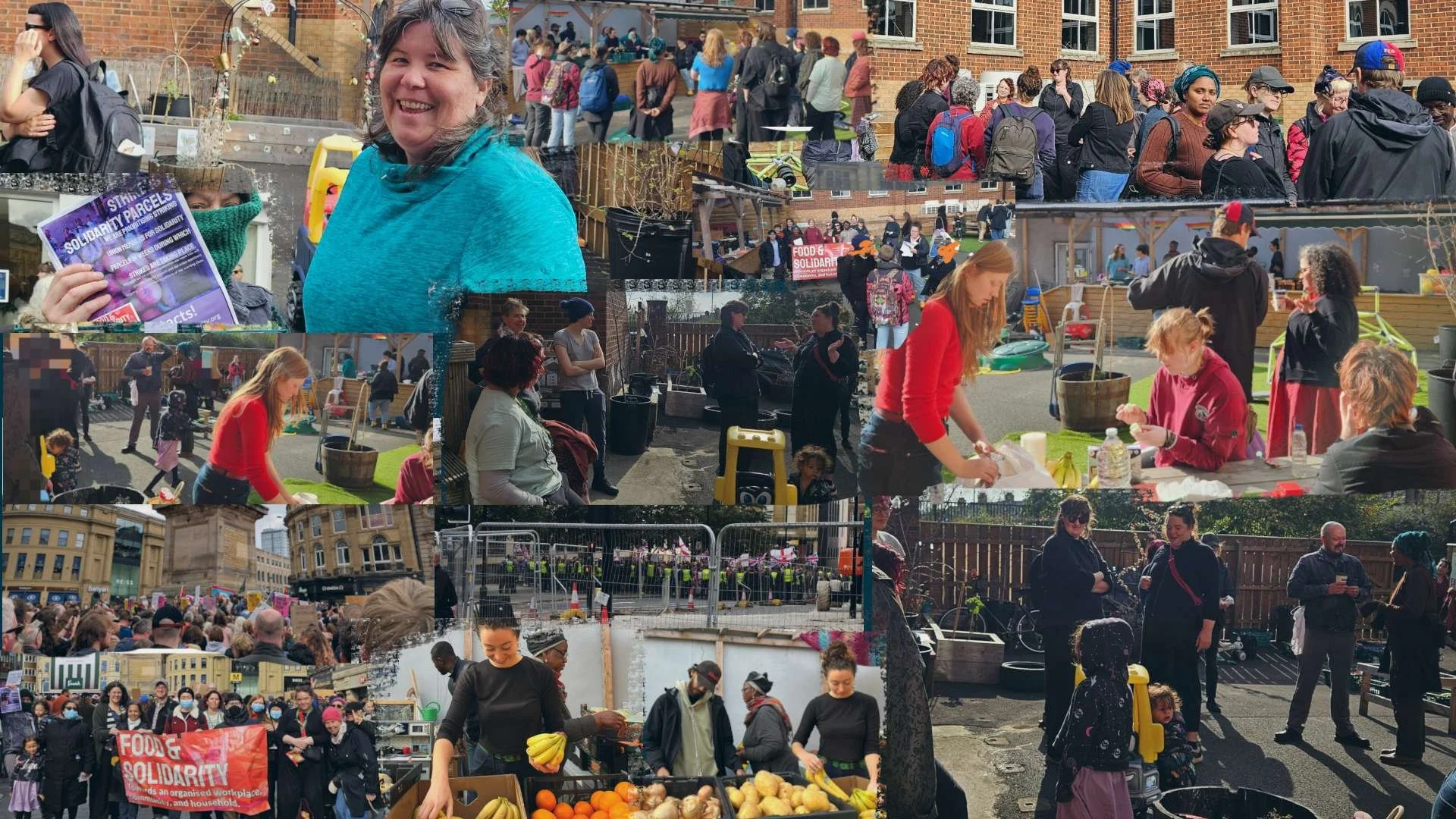
This April, Food & Solidarity is running a practical workshop on housing organising - how to act when someone near you is in trouble, and how neighbours can back each other up instead of dealing with landlords and councils alone.
The day before, we're also taking part in a booklet launch that came directly out of that work.
These events are about what happens when neighbours stop dealing with housing problems alone - and start acting together.

37% of private renters & around 40% of social renters are in poverty after housing costs and that many households are only pushed into poverty once rent is paid.
After housing costs matter because it shows what people have left to live on, not what they earn.
Freezing Local Housing Allowance while rents rise is deepening hardship. We see this every week in the lives of our members. But increasing this allowance in a housing system without rent regulation does not solve the problem.
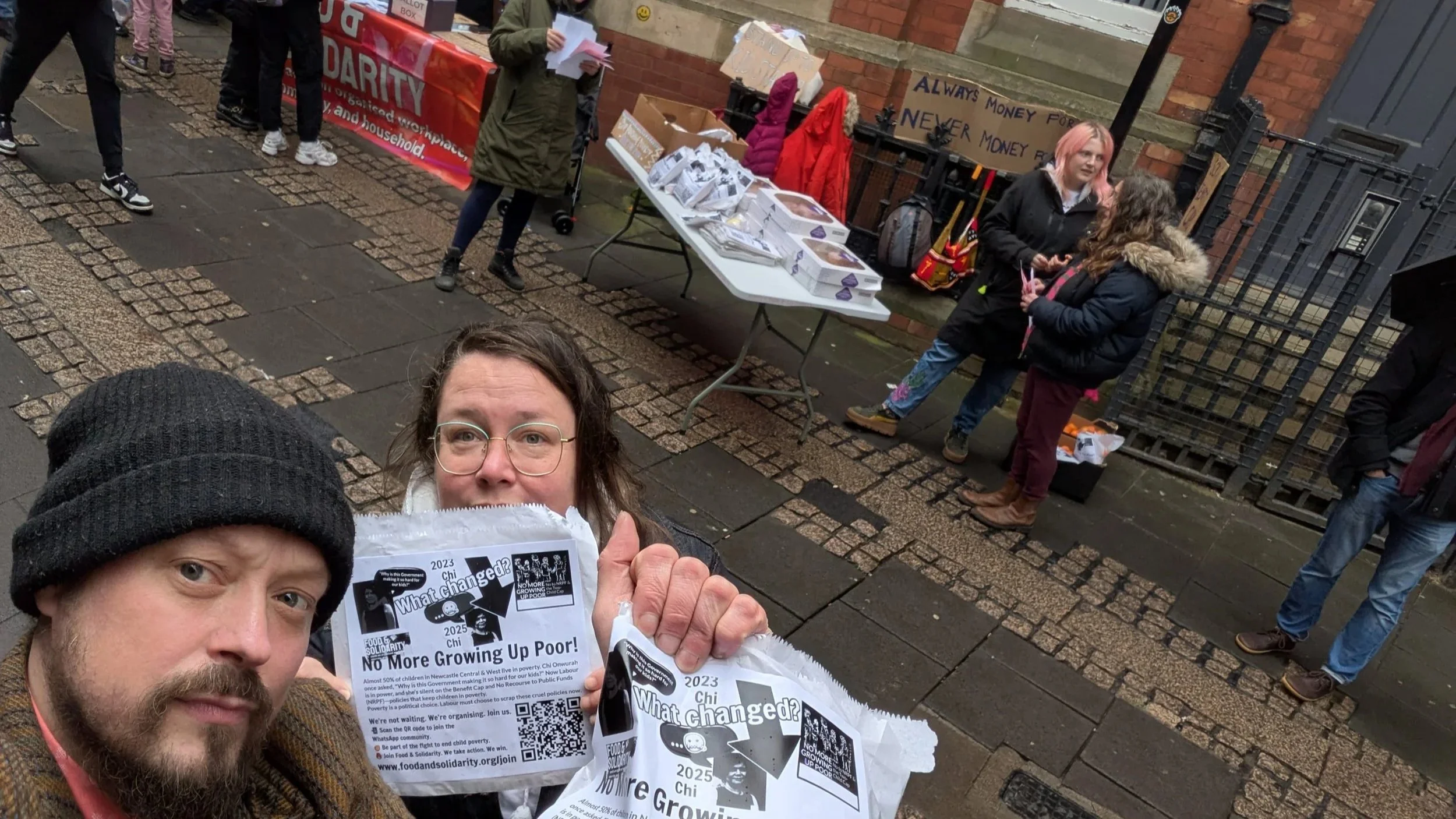
Sometimes change doesn't start with a big plan. It starts with people talking about what they're seeing every day, and deciding they can't ignore it anymore. That's how this campaign began.
It Started at a Members' Meeting
At a regular Food and Solidarity members' meeting, child poverty came up again. Members talked about how the two-child benefit cap was affecting families, and how immigration rules like NRPF (No Recourse to Public Funds) meant some families couldn't get help at all.
Someone suggested: what if we actually organised around this?
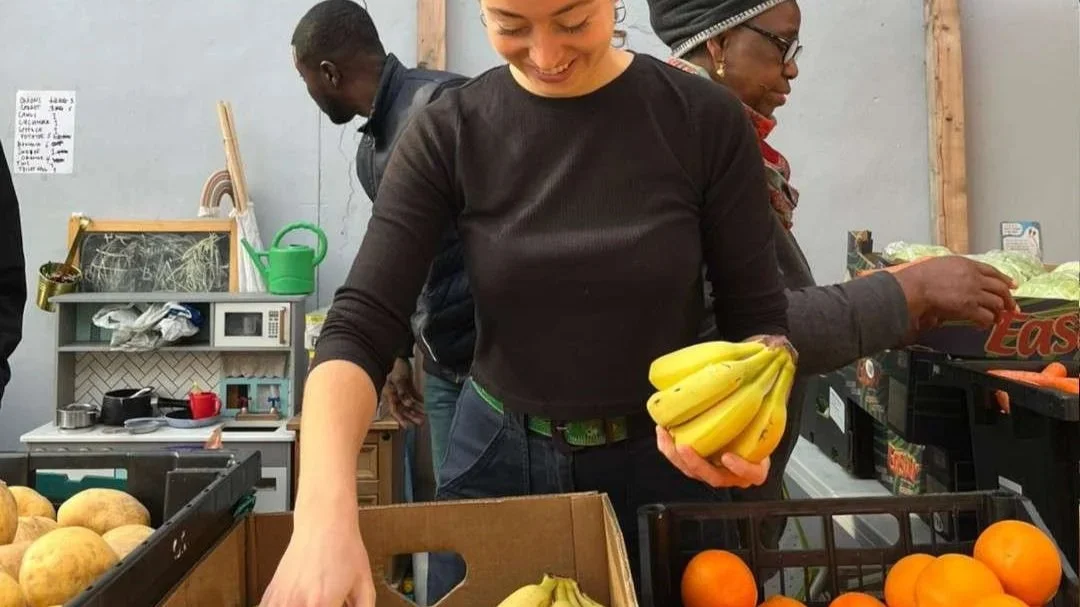
The UK Poverty report, published annually by the Joseph Rowntree Foundation, is the authoritative analysis of poverty in the UK. Drawing on extensive data sources, it identifies who is most affected by poverty, tracks how levels have evolved over time, and examines what lies ahead. The report provides in-depth insights into overall poverty rates, deep poverty, and persistent poverty across different groups throughout the UK.
Landlord wants to raise your rent? You can force them to cut it. A landlord wanted to charge £2,475 a month.
The tenant fought back.
The court said: No. Pay £1,950.
That is less than they were paying before!