A Victory, Not The End: Why Tenant Solidarity Must Continue After the Renters' Rights Act
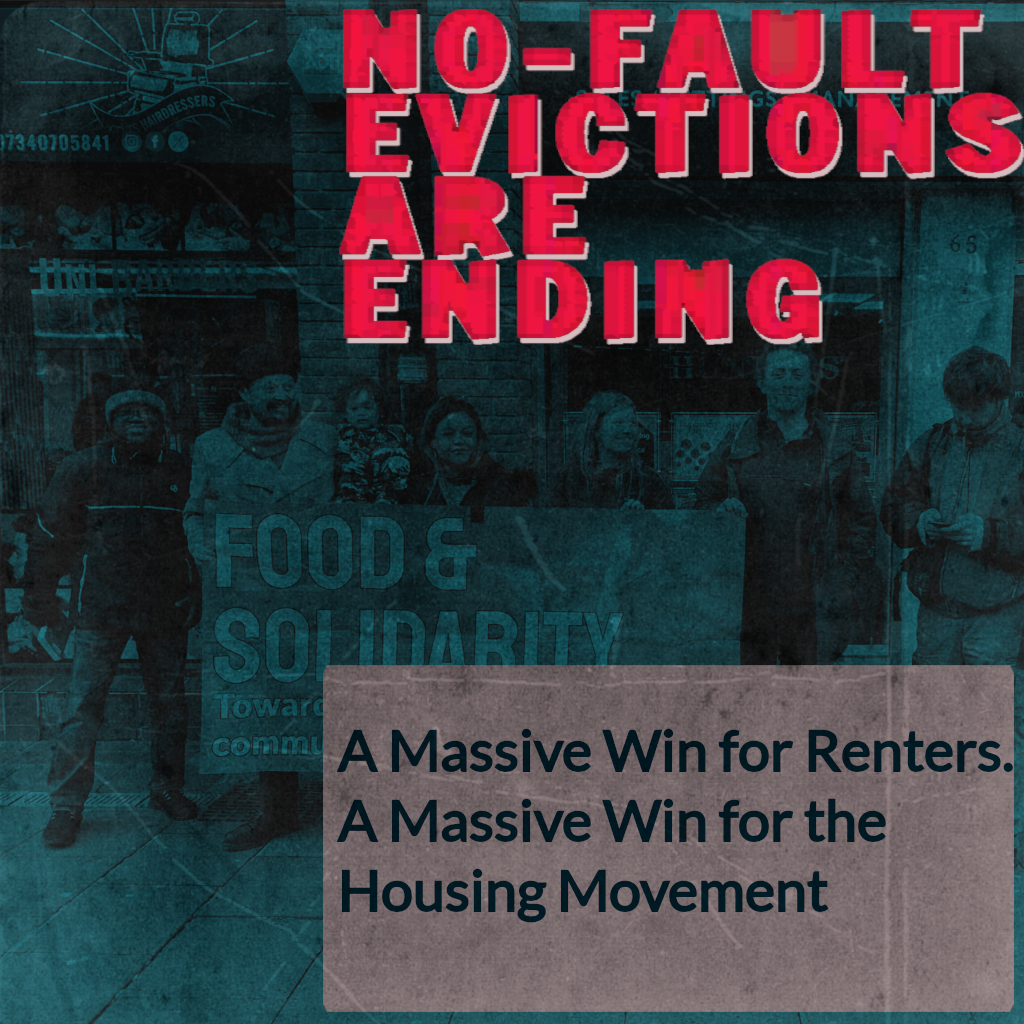
The passage of the Renters (Reform) Bill, now officially the Renters' Rights Act, is a testament to years of tireless campaigning by tenants, activists, and grassroots organisations like Food and Solidarity. While this historic legislation delivers a long-awaited and crucial victory, our fight is far from over.
The new Act, which is expected to be implemented on May Day 2026, represents a foundational shift in the relationship between tenants and landlords. The most significant change is the abolition of Section 21 'no-fault' evictions.
The New Landscape: The End of S21 and Periodic Tenancies
The abolition of Section 21 means that landlords will no longer be able to evict tenants without a legally recognised reason, bringing an end to the primary tool used to punish tenants for asking for repairs, challenging rent rises, or destabilising communities and undermining long-term security. The key provisions of the new law include:
Scrapping Section 21: Landlords must now rely on Section 8, such as serious rent arrears or needing to sell the property, to seek possession.
Ending Discriminatory Bans: Blanket bans against families with children or those receiving benefits ("No DSS/No kids") will be outlawed. (although the detail of how this will be enforced, how “indirect” discrimination will be defined, and what exceptions remain, will depend on regulations and guidance)
Move to Periodic Tenancies: Assured Short hold Tenancies will be replaced by single, periodic tenancies, allowing renters to put down roots and challenge poor housing standards without the constant threat of eviction.
A Landlord Ombudsman to suppliment courts: A new independent ombudsman will be introduced to help tenants resolve disputes without relying on costly and slow court proceedings.
Not the End of Eviction: The Gaps in the Act
Despite this major win, tenants' rights groups, including F&S and our allies in the Homes For Us Alliance (HFU), maintain that the Renters' Rights Act is only the first step. The end of Section 21 is absolutely not the end of eviction.
The law has crucial flaws that leave renters exposed to instability:
Rent Rises Remain Unchecked: The Act does not introduce any meaningful measures for rent control or stabilization. Landlords can still issue notice to raise rent to unaffordable levels, effectively using excessive rent hikes as a de facto eviction mechanism. This is why groups like HFU continue to demand immediate rent control, as successfully campaigned for in Manchester.
New Eviction Grounds: While ‘no fault evictions’ are gone, the modified grounds, especially those relating to landlords selling up or moving in, could still be exploited to remove tenants, particularly where genuine oversight and enforcement are weak.
The Problem of Political Power
The housing crisis is a political crisis driven by those who benefit from the status quo. Recent high-profile cases have highlighted the issue of landlords with political power acting with impunity, demonstrating that laws, however good on paper, are useless unless renters are organised enough to enforce them.
When politicians and public figures are revealed to be exploiting tenants or failing to maintain basic standards, it underscores that the fight is not just against 'bad landlords' but against a system that protects the wealthiest and most powerful.
Rachel Reeves broke the law when she failed to get the correct licence for a flat she rents out, and she is far from alone. Labour MPs such as Rushanara Ali and Jas Athwal also sit among Parliament’s landlord cohort and have both been outed as rouge landlords, the former evicting tenants and hiking rents and the latter operating as a slum landlord. The Financial Times’ analysis of the register of interests shows 85 MPs — 13% of the Commons, declare rental income,(figures form 2024)
Labour has 44 landlord MPs (11%), the Conservatives 28 (25%), and the Lib Dems eight (11%). Athwal, who rents out 15 residential and three commercial properties (all co-owned with a family member), surpassed even former chancellor Jeremy Hunt’s nine-property portfolio. Campaigners warn this concentration of landlord interests risks skewing debate on rental reform. Many landlord MPs previously helped water down the Renters (Reform) Bill.
Why We Must Protect Ourselves: The Power of Direct Action
The hard truth, demonstrated time and again across the housing crisis, is that authorities are not able to protect renters, and so we have to protect ourselves.

For years, Food & Solidarity members have been on the front lines. Fighting to protect our neighbours and comrades from being put on the streets. We have protected members against eviction and will continue to do this in the coming weeks, months, and years, regardless of what the new law says.
Food & Solidarity is not an abstract campaign: we are a neighbourhood organisation that practices the tactics we preach. Our work combines rapid-response eviction support, training, fundraising for costs, and targeted political pressure on councils and landlords. Below are case studies that demonstrate the concrete difference organising makes.
Pauline:

Grace
Dennis:

These are not one-off anecdotes. They are repeatable tactics: training, mapping, watch groups, legal accompaniment, fundraising, and political targeting. The Renters' Rights Act changes the legal ground, but not the politics: F&S will continue to run eviction-response support and local organising to enforce protections on the ground.
The Road Ahead: Demands and Next Steps
The Renters’ Rights Act is a tool hard-won through struggle. We celebrate the end of S21, but we remain vigilant. The only way to ensure real security, fair rent, and decent housing is through sustained Food and Solidarity; building the power of tenants on the ground to enforce our rights and fight for the further reforms, like rent control, that we urgently need.
The fight continues. You can join it here!