

The Fight Against Evictions
Collective action, housing justice, and what changes in May 2026
In the winter of 2023, Food & Solidarity members were at the forefront of Newcastle's eviction crisis, mobilising to push back against unjust housing practices, government cuts, and a system threatening to leave hundreds of people without a roof over their heads. This page is a record of what we did and what we won.
At the end of 2023, the UK government moved to block charities from providing tents to homeless people while simultaneously allowing the number one cause of homelessness, no-fault evictions, to continue. At the same time, the government was fast-tracking asylum claims, triggering a new crisis: refugees who had just been granted status were facing eviction in just seven days.
Members organised, demanded action, and won. That fight has continued every year since. See our a record of some of the campaigns and victories.
The Crisis
A Government-Orchestrated Crisis
Councils including Gateshead and North Tyneside had relinquished their duty to house single male refugees, leaving them exposed to street homelessness. Newcastle City Council had resisted this, but expected to receive 500 new housing applications per month from this group alone. Section 21 evictions were simultaneously at an all-time high as the cost-of-living crisis pushed landlords to sell up.
The actual causes of housing insecurity were being buried under misleading narratives about refugees and asylum seekers:
- Section 21 no-fault evictions persisting despite repeated government promises to ban them (finally abolished from 1 May 2026)
- Decades of underinvestment in social housing, leaving thousands on waiting lists
- Right to Buy depleting social housing stock without replacement
- The private rental sector operating with inadequate regulation and no rent controls
- Seven-day evictions for refugees replacing the previous 28-day move-on period
For members facing this crisis personally, read our full guides: eviction help in Newcastle, housing disrepair, and bailiff rights. For the stories of individual members we supported, see Grace's Section 21 case, JP and Shamme's disrepair campaign, and Sarah's revenge eviction win.
Our Key Demands
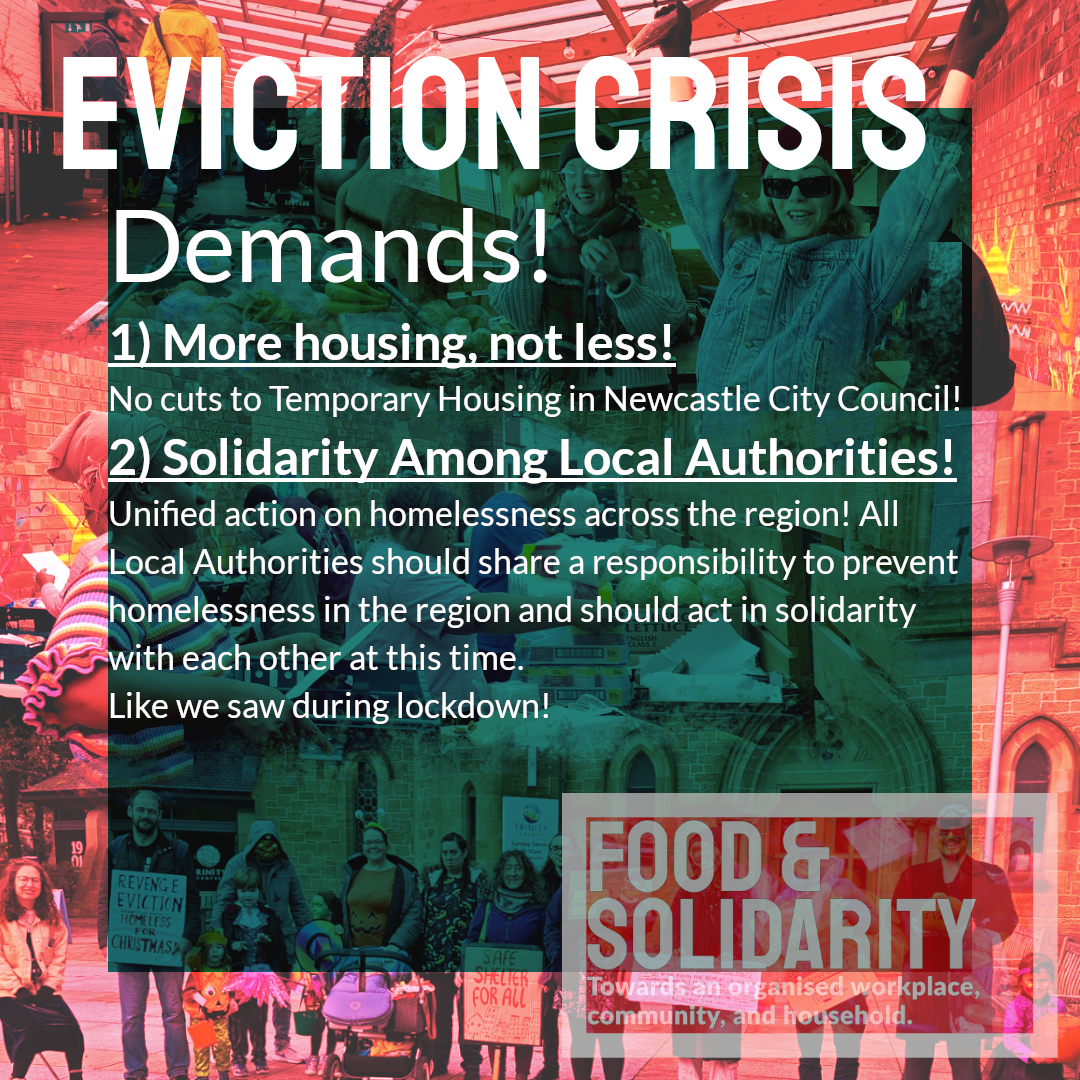
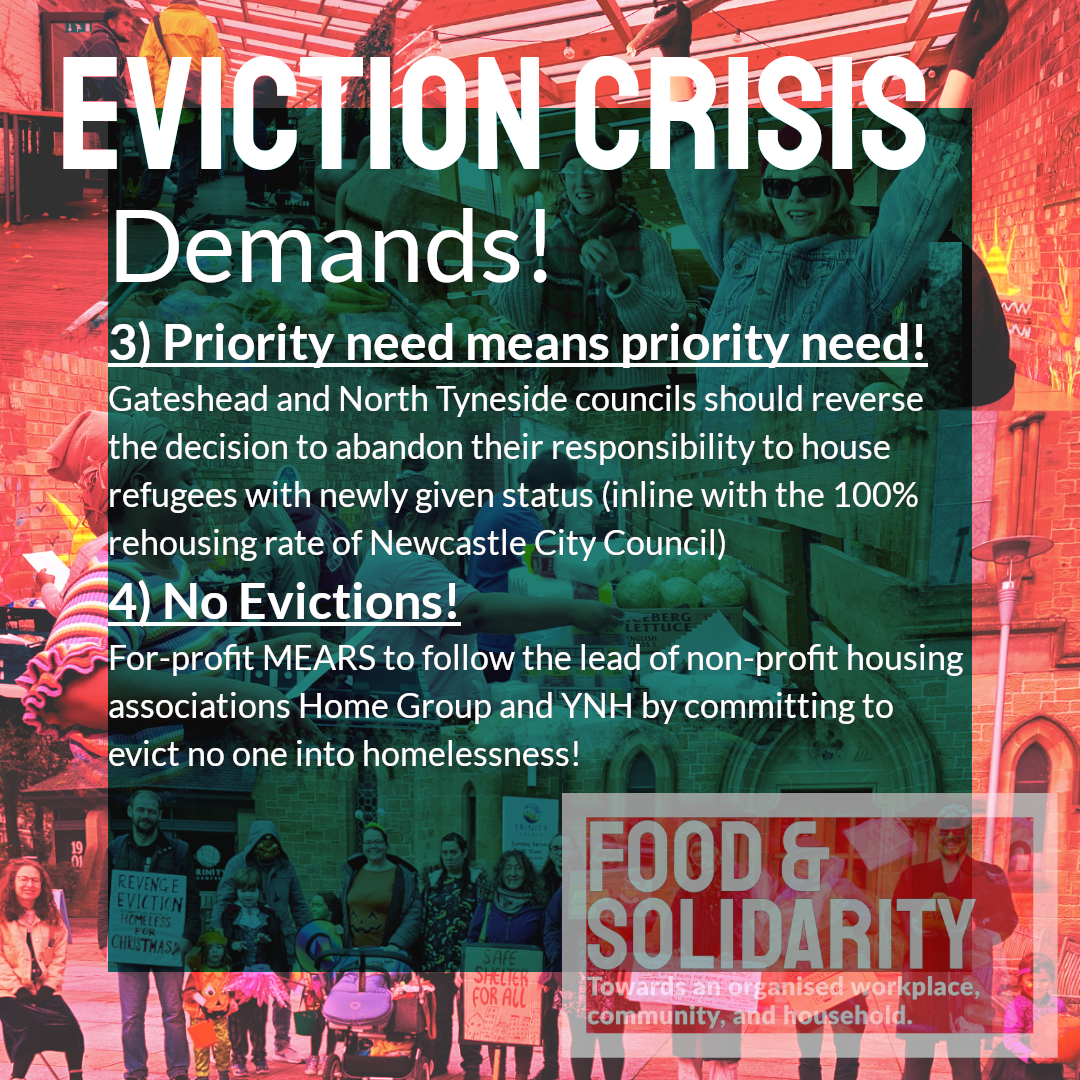
During the 2023 eviction crisis, members organised around three demands:
1. More Housing, Not Less
Newcastle City Council planned to slash funding for temporary housing during a homelessness crisis. Members demanded these cuts be halted and that temporary housing provision be expanded. Cutting these services while numbers were rising would push more people onto the streets.
2. Priority Need Status for All Vulnerable People
Councils in Gateshead and North Tyneside had begun denying their duty to house refugees with newly granted status. We demanded they follow Newcastle City Council's example, which had committed to 100% rehousing for refugees. Without priority need status, single adults can be turned away from emergency accommodation entirely.
3. No Evictions Into Homelessness
Private companies such as Mears, which house asylum seekers on government contracts, must follow the lead of non-profit housing associations like Home Group and Your Homes Newcastle, which had committed to evict no one into homelessness. We put direct pressure on Mears to stop evictions of asylum seekers facing the new seven-day move-on deadline.
What We Did
The campaign was built on direct action, grassroots organising, and sustained public pressure:
Protests and Direct Actions
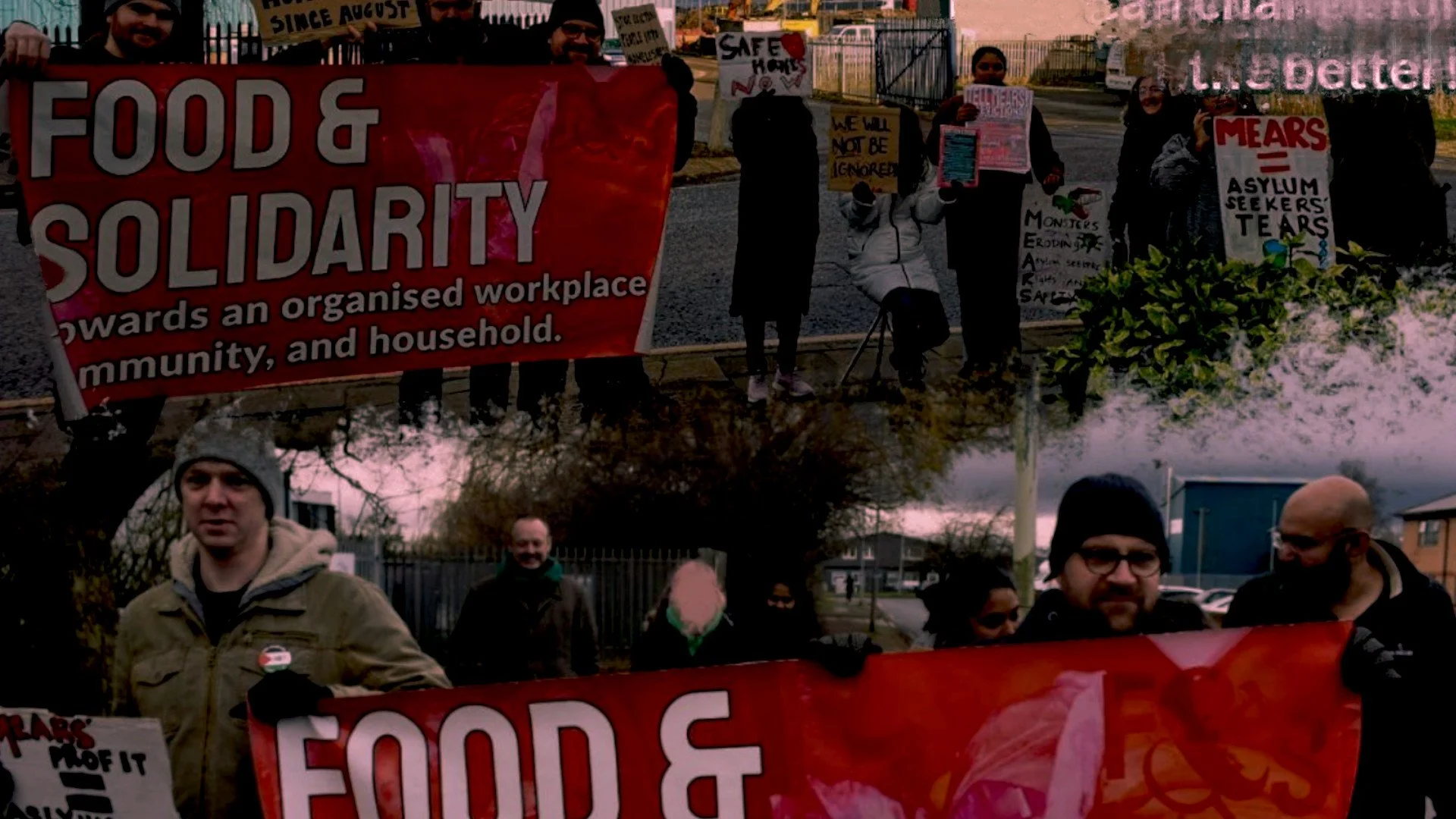
- Members organised multiple protests including outside Mears' offices in Darlington, demanding they stop mass evictions of refugees
- Public pressure from Food & Solidarity and allied organisations played a critical role in forcing the Home Office to reverse its seven-day eviction policy, restoring the 28-day move-on period
Community Stalls and Consultations
- Members held stalls in Benwell and other Newcastle neighbourhoods to raise awareness and collect public responses to council consultations
- Thousands of consultation responses were submitted, creating a formal record councils could not ignore
Council Disruptions
- When Gateshead Council failed to respond to demands, members disrupted their meetings, forcing officials to hear members' stories directly
- Coordinated attendance at Newcastle City Council cabinet meetings created sustained public accountability
This is what solidarity rather than charity looks like in practice. We do not make appeals on behalf of people affected, we organise alongside them.
The Wins
Collective effort led to concrete victories in 2023 and has continued to do so. See the full record of everything Food & Solidarity has won in Newcastle.
Cuts to Temporary Housing Halted (Winter 2023)
After months of campaigning, Newcastle City Council put its planned cuts to homelessness prevention services on hold.
Seven-Day Refugee Evictions Reversed (2023)
The Home Office reversed its seven-day eviction policy for refugees, restoring the 28-day move-on period. This came after increasing pressure from Food & Solidarity and the threat of escaltion with allied organisations across the country.
Breamish House Emergency Repairs (2025)
Members door-knocked a council housing block, collected evidence of damp and structural failure across multiple flats, and delivered a collective letter to a Newcastle City Council cabinet meeting. Repairs were completed within 24 hours. Read the full story.
Two-Child Benefit Cap Abolished (Autumn 2025)
The two-child benefit cap, which Food & Solidarity had campaigned against since 2023, was abolished in the Autumn 2025 budget following sustained national pressure in which our members participated.
Section 21 Abolished (1 May 2026)
No-fault evictions are being abolished from 1 May 2026 under the Renters' Rights Act. This has been a central demand of the tenant movement for years. It is not the end of evictions, but it is a significant step. Members must now ensure they understand the new Section 8 grounds so landlords cannot exploit them.
What Changes in May 2026
The Renters' Rights Act comes into force on 1 May 2026. Section 21 no-fault evictions will be illegal from that date. This is a major change.
What the Renters' Rights Act does and does not change
What changes: Section 21 evictions banned. All tenancies become periodic (rolling). No-DSS discrimination banned. Landlord ombudsman created. Awaab's Law extended to private renters (requiring landlords to fix hazardous damp and mould within set timeframes). Decent Homes Standard extended to private sector.
What does not change: Rent is not controlled. Landlords can still evict using Section 8 with valid grounds: rent arrears, selling the property (new Ground 1A), moving in themselves, or antisocial behaviour. New Section 8 grounds are deliberately broad and tenants need to know how to challenge them.
Read the full analysis: A Victory, Not the End: our analysis of the Renters' Rights Act and what it means for Newcastle tenants.
If you receive a Section 21 notice today, it may already be invalid (see the validity checklist in our eviction help guide). If it is valid, abolition is six weeks away and the timing of the court process may mean the new law comes into force before your case is resolved.
Call us on 07393 101018 as early as possible. Early contact gives us the most time to help.
Get Involved
Become part of a movement that fights for housing justice. Members plan direct actions, support each other facing eviction, and hold landlords and councils accountable. Membership starts at £3/month.
Facing eviction or housing crisis in Newcastle? Call 07393 101018 or use the form at foodandsolidarity.org/help.
Become a MemberFrequently Asked Questions
What is a Section 21 eviction?
Section 21 is a no-fault eviction where landlords can evict tenants without giving a reason, even if the tenant has done nothing wrong. It has been the number one cause of homelessness in the UK. Section 21 is being abolished from 1 May 2026 under the Renters' Rights Act. Until then it remains legal. If you have received a Section 21 notice, call us on 07393 101018 or read our full eviction help guide.
What were the seven-day evictions for refugees?
The government shortened the move-on period for refugees from 28 days to just 7 days after their asylum claims were granted. Food & Solidarity campaigned against this and successfully pressured the Home Office to reverse it, restoring the 28-day period.
What is priority need status for homelessness?
Priority need is a legal status that requires local authorities to rehouse someone facing homelessness. Without it, councils are not automatically required to provide accommodation. Food & Solidarity campaigned for all vulnerable people, including newly recognised refugees, to receive priority need rehousing.
When is Section 21 being abolished?
Section 21 is being abolished from 1 May 2026. After that date, landlords must use Section 8 with specific legal grounds. However, evictions will continue, and organised tenants who understand their rights will be better positioned than ever. Read our Renters' Rights Act guide and our full analysis.
How can I get help with eviction in Newcastle?
Call Food & Solidarity on 07393 101018, visit 120-126 Buckingham St Newcastle NE4 5QR, or read our eviction help guide. We provide court accompaniment, monitoring, and collective support.