What’s it like to get SLAPPed

What is a SLAPP?
A Strategic Lawsuit Against Public Participation (SLAPP) is not really about winning a legal case. It’s about stopping people from speaking.
SLAPPs are a misuse of the legal system. They involve bringing, or more commonly threatening, legal action that is weak, vague, or unmeritorious, using aggressive tactics to shut down lawful criticism or organising on matters of public interest.
They rely on:
fear
cost
stress
Imbalance of power and capital
a shopping list of legalistic gibber-gabber
And they work best when the target is made to feel alone.
Housing campaigns are a common target because tenants and their supporters are already under pressure, already stretched, and often unfamiliar with legal intimidation.
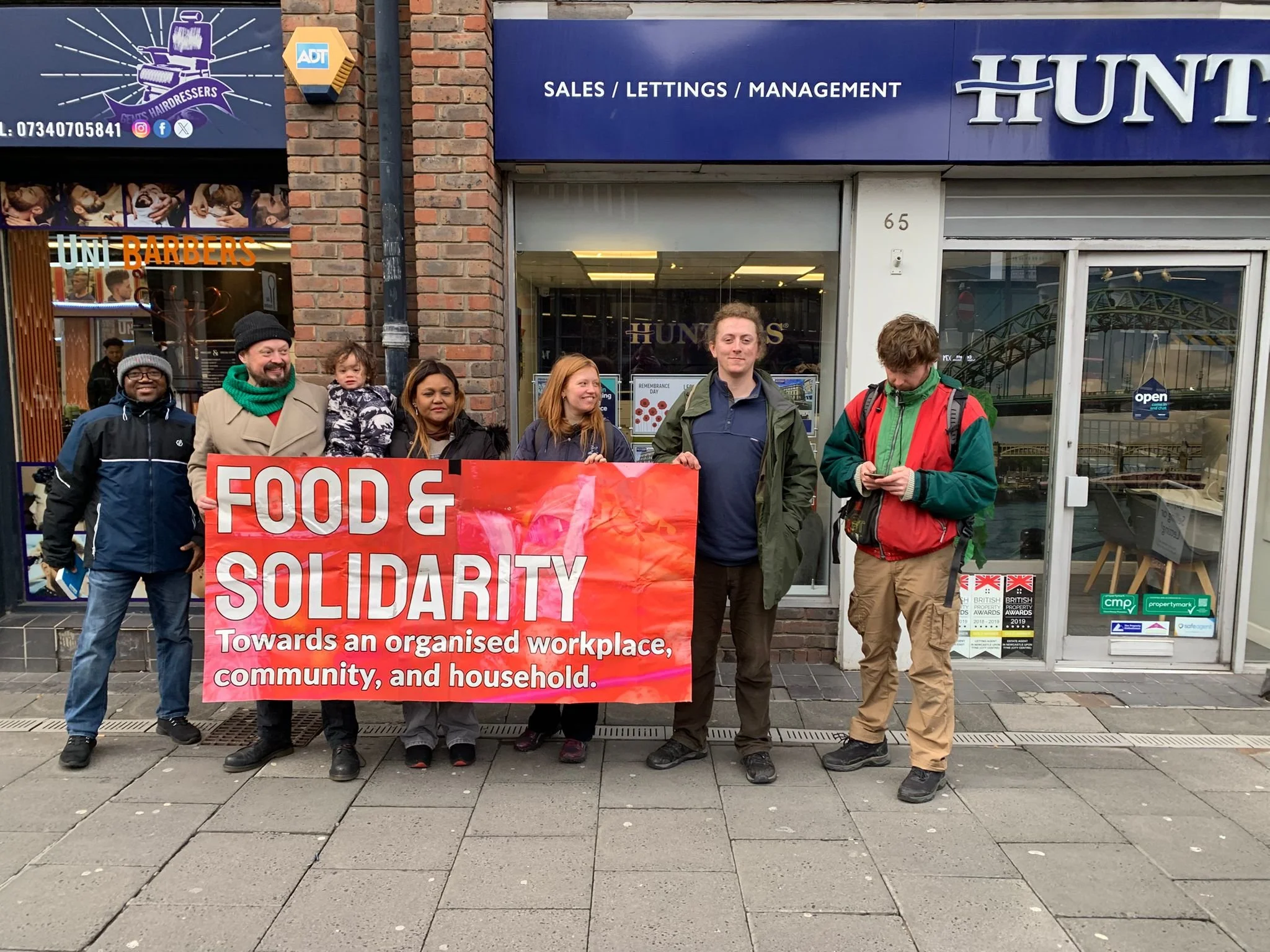
Who uses SLAPPs: & why
SLAPPs are most often used by rich and powerful entities: landlords, letting agents, developers, and companies.
Not because they are right, but because they can afford to threaten, or rely on their position of relative authority and their ability to write serious sounding legalistic letters.
The law becomes a tool not to resolve a genuine dispute, but to:
exhaust
intimidate
silence
distort the public record in their favour
This isn’t about one bad actor. It’s about a system where access to lawyers and similarity with legal language backed up with access to money can be weaponised against communities who are speaking out.

An anonymised example: Food & Solidarity as a SLAPP target
Several years ago, Food & Solidarity was the target of a SLAPP. We are sharing this example in anonymised form because the tactics repeat, and because recognising them matters.
At the time, we were supporting tenants facing eviction and serious disrepair. This included organising alongside them, communicating concerns, and publicly criticising housing practices based on facts: environmental health involvement, unresolved repairs, and the evidence experience of the tenants.
That context matters, because defamation law is not about whether something is embarrassing or damaging.
It is about whether it is untrue. A crucial point, stated plainly
You cannot defame someone by telling the truth. Criticism is not defamation. Public interest organising is not defamation. Speaking accurately about housing conditions is not defamation.
For a defamation claim to exist at all, there must be:
a specific statement
that is factually untrue
and that causes or is likely to cause serious harm
Vagueness is not a coincidence. It is the tactic.
What the letter said: and didn’t say
The letter we received accused us of making “numerous unwarranted derogatory comments on multiple forums”. It threatened injunctions and costs. It demanded that we stop making “any unwarranted derogatory comments in any form on any forum”.
What it did not do was:
Identify a single statement
Explain what was supposedly false
Explain how serious harm had been caused
Engage with truth at all
That absence is the point. Words like “numerous”, “derogatory”, and “in any form” are doing a lot of work. They are deliberately broad, deliberately intimidating, and deliberately chilling. They are designed to make you self-censor everything, everywhere, just in case.
A SLAPP doesn’t argue that you’re wrong. It tries to make you stop being right out loud.
Why this is a SLAPP: and not a genuine defamation concern
When someone has genuinely been defamed, the route is clear:
They identify the statement
They explain why it is untrue
They explain the harm, how has making this statement has negatively impacted the finances of the company or person
When a powerful actor instead sends a sweeping, threatening letter with no particulars, what they are saying is not “you lied”. They are saying, “we want you to shut up”. This is exactly the kind of behaviour the Solicitors Regulation Authority (SRA) has warned against.
What the SRA says about SLAPPs: in plain English
The SRA regulates solicitors in England and Wales. It has issued a formal Warning Notice on SLAPPs, because of growing public concern about lawyers being used to intimidate critics and campaigners, including critics of Russian action in Ukraine
The SRA is clear:
SLAPPs are a misuse of the legal system. They describe SLAPPs as threats or claims that are unmeritorious or abusive, brought to stifle lawful scrutiny and public participation, including campaigning.
Importantly, the SRA stresses that:
solicitors must not bring or threaten meritless claims
a solicitor’s duty to their client does not override their duty to the court, the rule of law, and the public interest
legal correspondence must not become intimidatory, oppressive, or abusive
This applies before court, including in pre-action letters. And the SRA explicitly recognises that many SLAPPs never reach court because the threat alone achieves its goal. In other words: “We were just sending a letter” is not a defence.
The SRA highlights features that are strongly indicative of SLAPP behaviour, including:
targeting speech on matters of public importance (like housing conditions or actions of a professional housing provider)
a clear imbalance of power and resources
vague, unparticularised allegations
exaggerated threats about costs or consequences
correspondence designed to frighten rather than clarify
How we responded, and why
Our response was not about being clever or confrontational. It was about refusing the framing.
We did three key things:
We insisted on truth: If something we had said was untrue, it could be identified. If it could not be identified, it could not be answered.
We refused vagueness: We did not argue in the abstract. We did not apologise for unspecified wrongdoing. We did not accept a demand to stop speaking “in any form”.
We named the behaviour: We explicitly raised that this correspondence constituted a SLAPP. We reminded the solicitors of their own regulator’s warning.
This was not legal brinkmanship. It was political clarity. SLAPPs rely on you being unsure, quiet, and alone: We chose light instead.
Why naming SLAPPs matters
Silence is what makes SLAPPs work. When intimidation is treated as normal, powerful actors keep using it. When it is name: calmly, clearly, collectively. The balance shifts.
The SRA itself acknowledges that:
SLAPP threats often succeed without ever reaching court
regulatory action is possible even where no case is issued
correspondence that is vague, aggressive, or oppressive can breach professional standards
This means something important: the law is not neutral when power is unequal, but neither is it entirely on the side of those who misuse it.
How to recognise a SLAPP letter
This is not legal advice. It’s about pattern recognition. Red flags include:
accusations without quoted statements
no explanation of what is false
sweeping demands to stop speaking entirely
threats of injunctions or massive costs early on
an urgent, aggressive tone designed to panic you
Being threatened does not mean you are wrong. Focus on collective defence, not individual panic
Food & Solidarity is a direct-action, member-led organisation. We exist because housing struggles are not individual problems, they are collective ones. SLAPPs are designed to isolate, make you feel small and afraid, collective organising makes that strategy less likely to succeed.
If you are facing intimidation, the answer is not to retreat into silence and self-blame. The answer is to stand together, share knowledge, and refuse to be picked off one by one.
This article is not legal advice. It is about power, intimidation, and collective confidence, and about refusing to let the law be used as a weapon against communities speaking the truth.