

Information for people helping with food packing & distribution
(updated 16th November 2026)
Manual handling[1],[2] – Lifting and lowering
Planning!
- Can I handle the load?
- Do I need help?
- What are the hazards?
Posture!
- Keep your feet apart. Slight bend your back, hips, and knees.
- Keep your shoulders level and facing forward.
- Keep the load close to your body.
- DO NOT STRETCH YOUR BACK!
The Lift!
- Raise the load while straightening your legs.
- Keep the load close to your waist.
- Keep your head up.
- Move smoothly.
- DO NOT TWIST OR TURN!
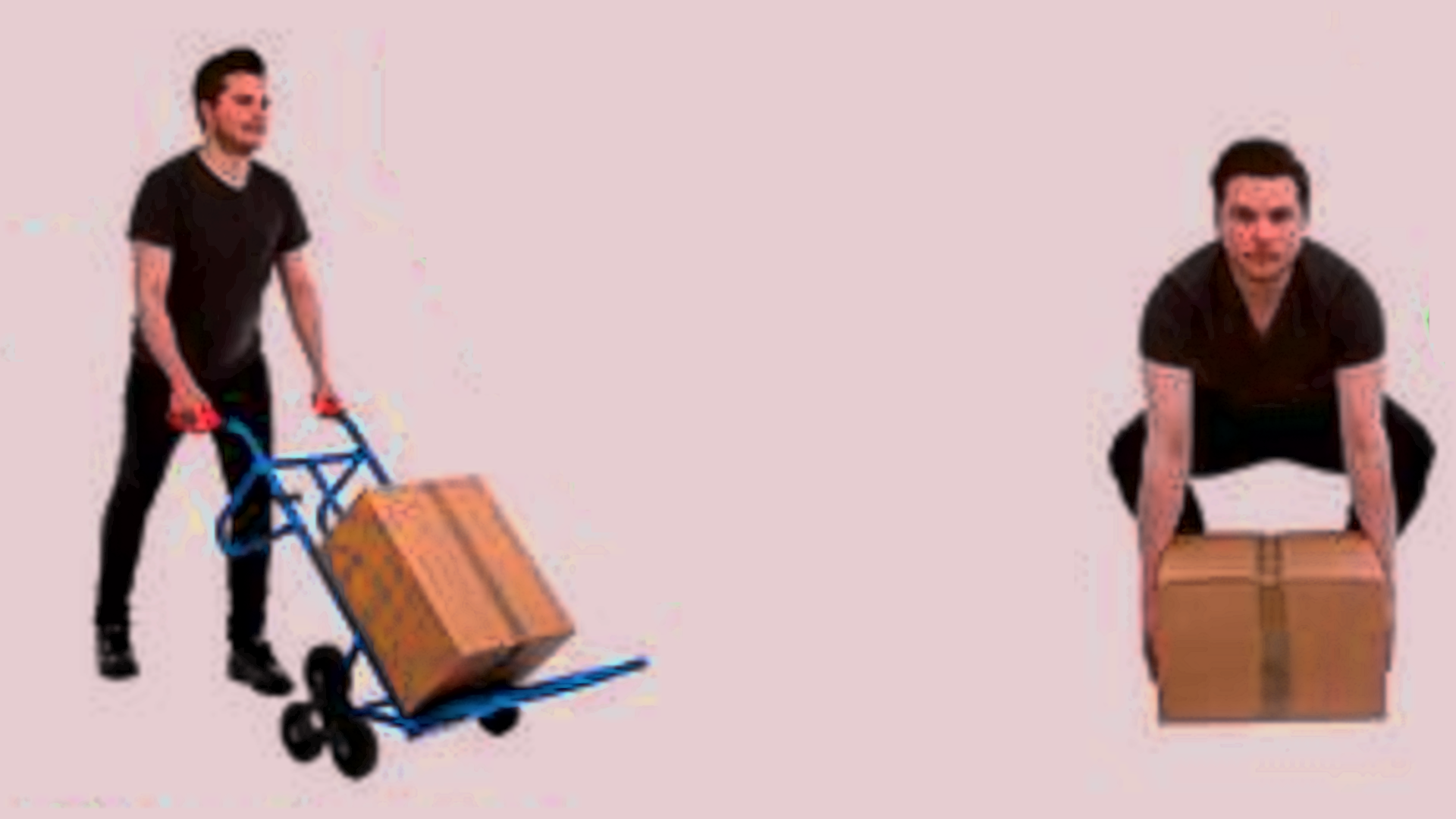


Please watch the below video about safe lifting & follow these tips when lifting food & parcels
If you have any injuries that will make it difficult for you to lift, please avoid lifting.
There is a first aid kit and incident book on-site in the large Food & Solidarity plastic crates at all our packing venues.
Safeguarding
While Food and Solidarity has no care role, and responsibilities are shared collectively, it is important that members are proactive in reporting issues that occur. To this end, training in the complaint procedure & safeguarding will be offered regularly. Any complaint committees will be made up of people who have participated in — or ideally given — this training. The complaint committees (and all members) will have access to a document about how to report concerns externally; concerns should be reported using the Report Concern (https://foodandsolidarity.org/reportconcern) procedure in the first instance, BUT this does not replace safeguarding. When using other organisations' space, we may have to abide by their safeguarding policies — please check here; links to policies are contained in this spreadsheet (https://docs.google.com/spreadsheets/d/e/2PACX-1vTwvtK5pvj2ep9m0gS_aR_GpUNXrBXEY9wE95RD4whoyeO8OyXi4buS1T6ussWW1I3QU1yez65WL4HH/pubhtml).
Reporting safeguarding externally
Safeguarding
While Food and Solidarity has no care role, and responsibilities are shared collectively it is important that members are proactive in reporting issues that occur, to this end training in the complaint procedure & safeguarding will be offered regularly. Any complaint committees will be made up of people who have participated in, or ideally given, this training. The complaint committees (and all members) will have access to a document about how to report concerns externally; concerns should be reported (Report Concern) using the above procedure in the first instance BUT this does not replace safeguarding. When using other organisations space, we may have to abide by their safeguarding policies – please check here, links to policies are contained in this spreadsheet.
Reporting Safegaurding
Report a concern about a child
For Children - If you have a concern about a child, contact. Report a concern about a child:
- Initial Response Service – 0191 277 2500
- Emergency Duty Team – 0191 278 7878
- NSPCC Helpline – 0808 800 5000
To report a concern complete one of our online enquiry forms:
- public enquiry: worried about a child or young person
- professional enquiry: worried about a child or young person
For Adults
If your concern is about an adult (someone aged over 18): All safeguarding concerns are reported to Adult Social Care at Newcastle City Council. Professionals
- If you are a professional you will need to complete the online referral form.
- You can read a guide on making a good safeguarding adults referral or watch this webinar on making a good safeguarding adults referral.
- Professionals can seek advice on safeguarding adults matters via the Safeguarding Adults Unit.
Public
You can complete the online referral form
Other methods of contact:
Phone
- 0191 278 7878
Text/SMS
- 07968474891 (Monday–Friday, 8am–5pm)
In writing
- Adult Social CarePoint, Westgate Community Complex, West Road, Newcastle upon Tyne, NE4 9LU
In person
- You can tell someone you trust such as a Social Worker, Nurse, Doctor, Carer, Support Worker or Housing Officer. They will pass your concerns on to Adult Social Care.
- If you are a professional working or volunteering with an adult at risk you will be asked to complete a written referral form (above).
Food packing and distribution
- The main way we organise food packing is via WhatsApp on our Food & Solidarity phone – 07393 101 018. Different people help organise the rota each week.
- Let us know in advance what dates you can help, so we can ensure we have the right number of people. If you need to cancel a slot you have agreed to help with, please message the Food & Solidarity phone as soon as possible, so we can find a replacement.
- Everyone involved in Food & Solidarity is volunteering their time & trying their best to make things work – sometimes problems arise that might mean things are delayed or not as smooth as usual. Please be patient & do your best to help each other if this happens!
- We need different people to take on the roles that make food packing & distribution happen. Teach each other how things work & contact the Food & Solidarity phone if you want to try a new role & need more training!
For drivers only
- You should not go into anyone's house who you are delivering to.
- You should report any issues whilst delivering to members to the phone.
We have a complaints/incident process members can use if any issues occur during Food & Solidarity activities, for example related to an accident or a problem with another member or volunteer. Members should receive this when they join, but if you need it & don't have it, message the Food & Solidarity phone.
Any volunteer should also report any concern or incident here
Report a concern or incident (https://foodandsolidarity.org/reportconcern)
If you are not yet a Food & Solidarity member, please join here!
Join Food & Solidarity (https://foodandsolidarity.org/join)
Footnotes
[1] Full HSE Manual handling guide (INDG143, PDF) — https://www.hse.gov.uk/pubns/indg143.pdf
[2] HSE guide on assessing risks (INDG383, PDF) — https://www.hse.gov.uk/pubns/indg383.pdf
Links on this page
- Safeguarding policies spreadsheet: https://docs.google.com/spreadsheets/d/e/2PACX-1vTwvtK5pvj2ep9m0gS_aR_GpUNXrBXEY9wE95RD4whoyeO8OyXi4buS1T6ussWW1I3QU1yez65WL4HH/pubhtml
- Safe lifting video (YouTube): https://www.youtube.com/watch?v=KIMSsJunXB4
- Report a concern or incident: https://foodandsolidarity.org/reportconcern
- Join Food & Solidarity: https://foodandsolidarity.org/join
- HSE Manual handling guide (INDG143, PDF): https://www.hse.gov.uk/pubns/indg143.pdf
- HSE Assessing risks guide (INDG383, PDF): https://www.hse.gov.uk/pubns/indg383.pdf